Category: Personal growth and development

  • Understanding Birthright: Importance and Spiritual Implications

    Understanding Birthright: Importance and Spiritual Implications

    What is in birthright? How important is it and what are the spiritual implications? Whether you are a firstborn or not, you need to pay attention to this because it will affect you either directly or indirectly. You need to draw your chair closer because you are about to hear something mind-blowing.

    Being a firstborn is not a coincidence or mere chance; it is a divine design that carries grave responsibilities and consequences. Unfortunately, the majority of people are unaware of this reality. I am going to show you why you need to change this mindset.

    Biblical Perspective

    When God took revenge on the Egyptians, he went after their firstborn sons, thus loosening Pharaoh’s iron grip on the Israelites. In the book of second Kings chapter 3, the Israelites besieged Moab. But when the king of Moab made a burnt offering of his first son to their idol Chemosh, the tide turned against the Israelites. And in the fullness of time God sent his first Son to redeem mankind from sin.

    Birthright Is a theme that spans through the entire length of the scriptures. In the Bible, being a firstborn is not merely a position or title, it is an assignment. The Abrahamic covenant was propagated by birthright and that’s why Jacob could not embody the blessings until he had received the birthright. God places a high premium on birthright and that’s why the Bible declared “blessed is every male that opens the matrix”. Likewise, Deuteronomy 21:17 confers a double portion of inheritance on the firstborn son.

    Universal Recognition and Responsibility of the Firstborn

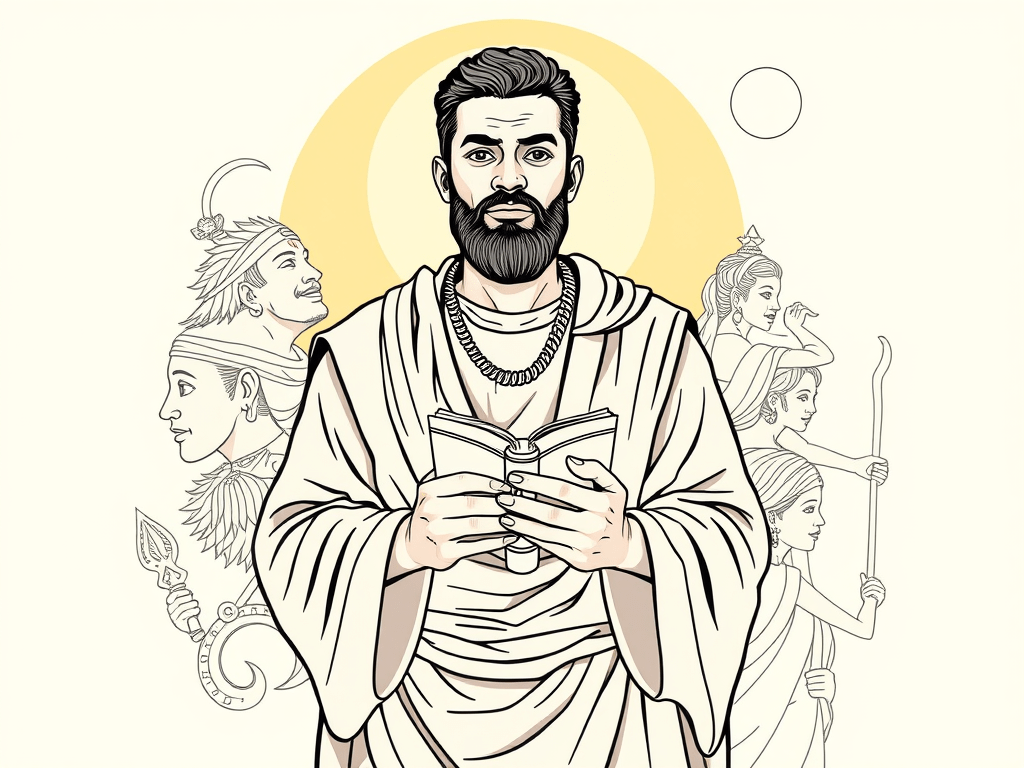
    In various cultures and parts of the world, the first son is assigned a sacred role. In Africa, the first son is the priest, the spiritual heir and the leader of the family. In China, he is entrusted with the duty of maintaining and propagating the family surname, and also upholds ancestral rites. In the Hindu tradition, he is given the charge of the family estate, groomed for leadership in the family and lights the funeral pyre. In Europe and Arabian countries, the first son inherits the throne or estate and is considered the main continuity of bloodlines. Obviously, these are no mean tasks, they are heavy responsibilities.

    Link between Birthright and Destiny
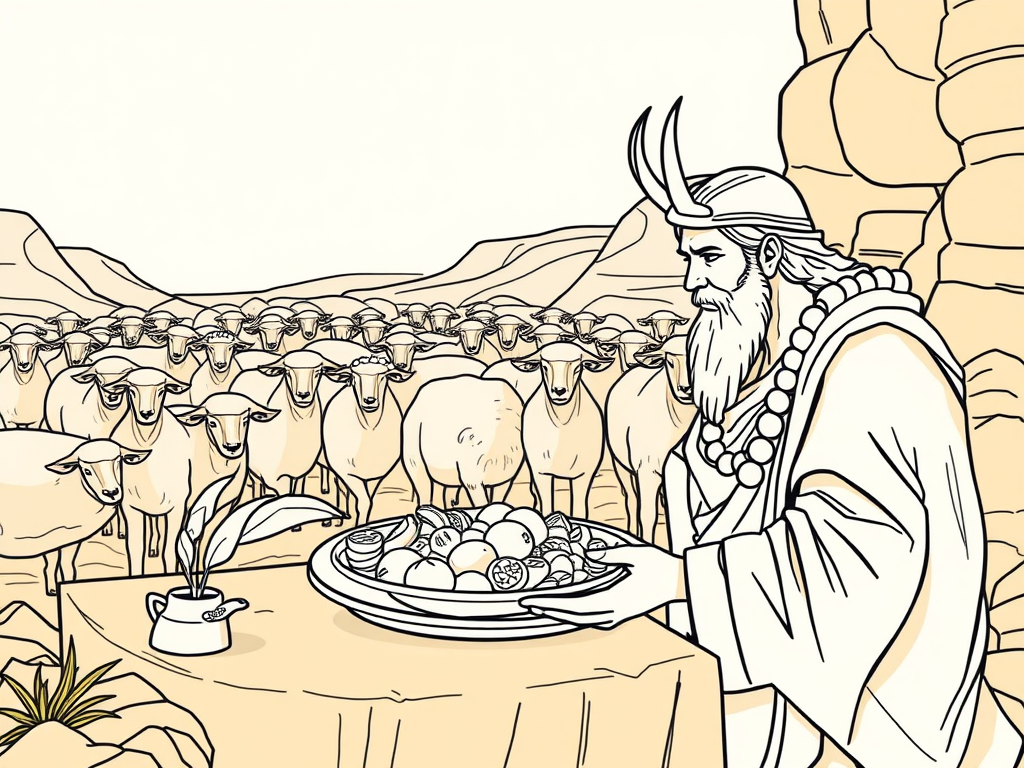
    The first born therefore does not have the luxury of frivolity or recklessness. Otherwise he misses the mark and goes down in history as a historic failure. This was the lot of Cain who abnegated his priestly role to his younger brother, Abel who offered a more excellent sacrifice. Esau placed little value on his birthright to the extent that he sold it to his younger twin, Jacob. Esau exhibited a carefree and nonchalant attitude towards his birthright. He was described as a profane person who devalued the Abrahamic covenant and exchanged it for a plate of food. He was ruled by his lust, just like Reuben his nephew. Reuben, the first son of Jacob took after his uncle Esau. What his father had staked his life to acquire, he frittered away on the altar of self-gratification. When it was time for him to rise to the occasion of his sacred calling, he fell to the level of his shortsighted craving. On two, occasions, he dropped the ball, thus conceding an irreparable own goal. Reuben did not lose his birthright the day he slept with is father’s wife. He started losing it the day he could not account for his youngest brother, Joseph who was entrusted to his care. Incest with his father’s wife was the consummation of his ignominious crash. The consequence? He lost his staff of authority to Judah and the double portion of inheritance to Joseph – the one he could not protect. In his valedictory benediction, Jacob gave his verdict on Reuben, his now ceremonial first son – “unstable as water, thou shalt not excel”. Amnon was king David’s first son but instead of building on his father’s solid foundation, he decided to default to the moral quagmire of Reuben, his progenitor. Consequently, he lost his place, the throne and his life. He also acquired for himself an eternal blot.

    Why Many Firstborns Fail
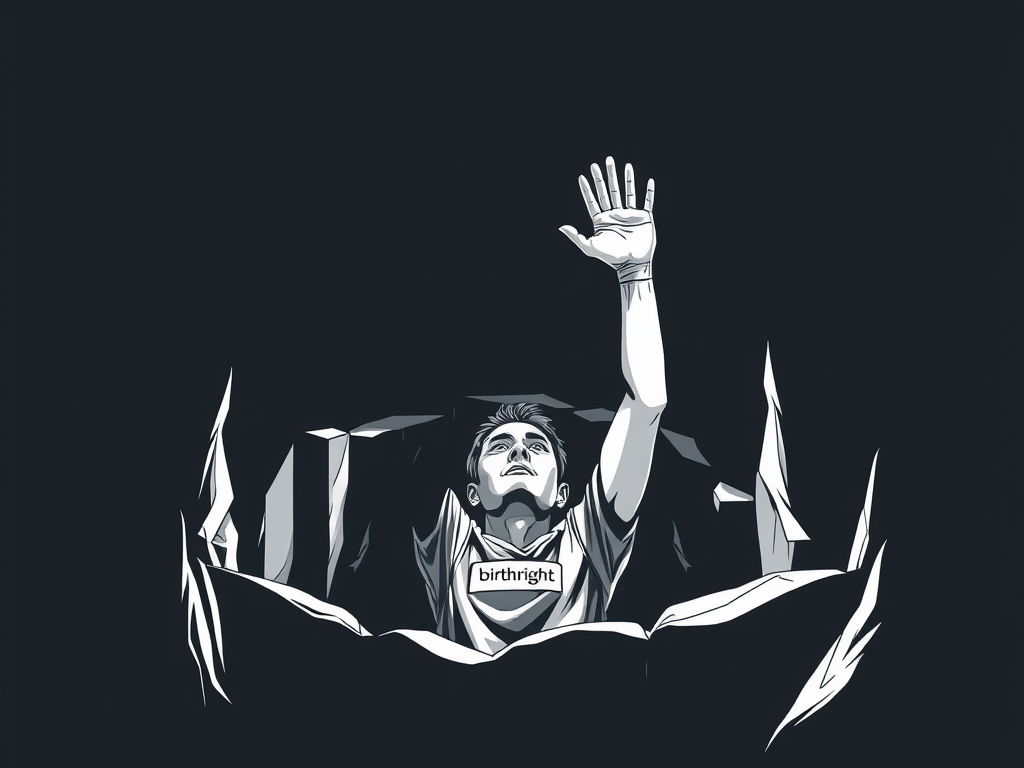
    But what is responsible for the high failure rate of first sons especially in Africa? Birthright is a slippery slope that can bring a man from the Pinnacle of glory to the slough of despond. Many first sons have become merely ceremonial rather than sacred as was originally intended. In the world of today, the sacredness of the firstborn son has been trampled upon – not by others, but by the first sons themselves. But what does one expect from a generation that is ruled by fleshly desires?

    First, understand that whatever God is interested in, also arouses the devil’s inquisitiveness. If God has apportioned double blessings for the first son, then the devil will invariably allocate double barriers just to spite God. And this is the truth many people are ignorant of. Know it today that if you are a first son, then the devil has a special interest in you. Secondly, the first son naturally inherits their father’s enemies, limitations, reproach and woes. That’s why God went after the first sons of Egypt.

    Secondly, we have bifurcated the inseparable duo of responsibility and inheritance, thereby creating a crop of first sons who want inheritance, but want nothing to do with the associated responsibilities. They want to sit on the throne without the discipline and courage of a king. They want to receive estates without the wisdom to maintain it. They want to bear the family name without the character to authenticate it. They want to inherit but have no plans to bequeath. Some even hope their father dies soon so they can preside over his wealth. Such first sons are a mockery to the divine ordination of birthright. They are modern day prodigal sons with a sense of entitlement without a sense of purpose. A former neighbour was fond of calling my first son “heir apparent”. I immediately detested the gesture because I could see that she was unknowing inculcating in him a sense of entitlement without commensurate responsibility. She was invariably saying to him “no need to sweat”. And I believe that she does that with her first son. Before you blame her, you need to understand that she is not alone. It is a prevailing mentality in Africa today. The first son simply putters about, waiting for inheritance which cannot be activated until the demise of the father. If he is unlucky, his father might even outlive him. This is the opposite of what happens in aristocratic circles where the first born is groomed, not just to inherit, but most importantly to maintain the family status and uphold its values. He knows from infancy that a heavy task rests on his shoulders that the price of failure is too great to imagine.

    Closing Thoughts
    Parents must understand the blessings and burdens that naturally comes with birthright, and do whatever is necessary to hold this reality up to the firstborn. He must not be pampered to his detriment. He should be groomed for leadership and responsibility. Are you a first son? Then it’s time to change the game. Stop hoping for an inheritance and start taking responsibility. As a priest, keep your vows. As a king, keep the standard high. As an ambassador, be the face of your family. As a leader set the pace. Remember that birthright is exchangeable. If you fail, another will take your place without much ado. Remember, for every Esau who gambled away his birthright, there is a Jacob to purchase it. For every Reuben who glosses over his birthright, there is a Judah receive is mantle and a Joseph to divert his double portion. For every Amnon who desecrates the throne, there is a Solomon to dignify it. For every Judas who betrays his calling, there is Mathias to redeem the bishoprick.

    My friend, get up from the dust and run your race. You may not run faster than everyone but run it the best you can and the blessing of the first son will gravitate towards you. Learn to take responsibility. Learn to dignify yourself. You have received the baton. Hold it firm and don’t let it drop. Haul yourself to the fishing and pass on the baton. Let is not be said of you “here lies Esau a profane man who sold his birthright for one morsel of meat”. But let it be said, “here lies a man who was faithful to his calling.

    Feel free to drop your comments or share your personal experience in the comment section for further engagementsIf reading this post was helpful, share it with others who might need it. Subscribe to get new posts directly in your inbox and watch out for more.

    Go back

    Your message has been sent

    Warning
    Warning
    Warning
    Warning.

  • The Battle of Screens vs Books: A Deep Dive

    The Battle of Screens vs Books: A Deep Dive

    The bookshops are empty and dusty, but the cinemas and comedy halls are overflowing. The books are closed, but the screens are beaming. The eyes are wide open, but the brain is gradually falling into a slumber. Reason has been imprisoned, but emotions are on rampage. The world is going through a rapid evolution of sorts.  It has become one big eyeball without brains. It only sees but cannot understand. It only feels but cannot ground the signal in reason. This is the tragedy of an age that lives on the screen – television screen, computer screen, mobile phone screen.

    The mobile technology has definitely caused a paradigm shift which has metamorphosed into a pandemic shift. We grew up reading books. This generation is growing up dreaming and drooling over screens. Even adults now clutch onto mobile devices with the tenacity of an infant guarding her plastic toys. People now generally spend a disproportionate amount of their day watching video. They would rather watch a thousand videos than read a chapter of a book. In an age ruled by screens, where most knowledge is delivered through short videos, visual slides, and voice notes, we’re beginning to treat reading like an optional luxury. And yet, something deep within me resists this shift — not from nostalgia, but from a growing conviction. It’s not just a stylistic preference. It’s a neurological, psychological, and even moral concern. It transcends the periphery of theory into the sacred realms of science, experience and observation.

    1. The Brain on Books vs. Screens

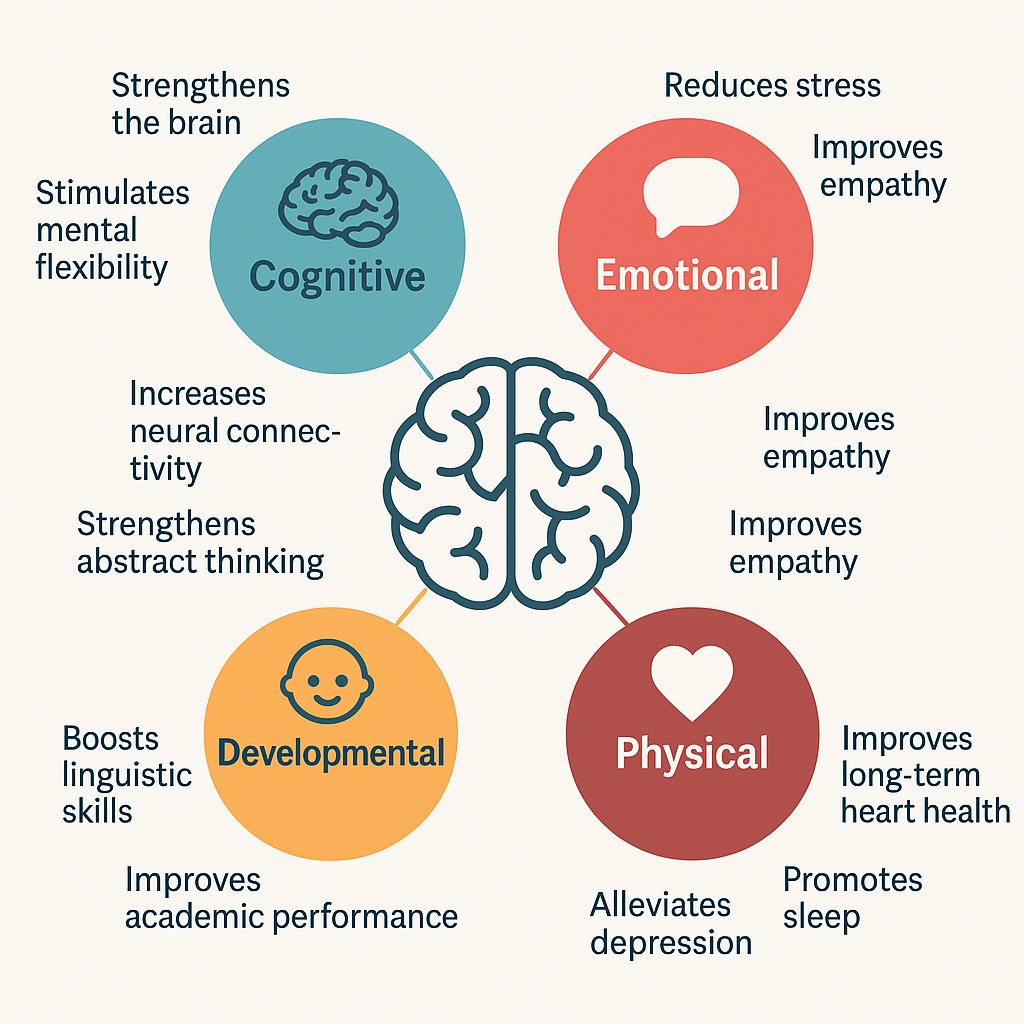
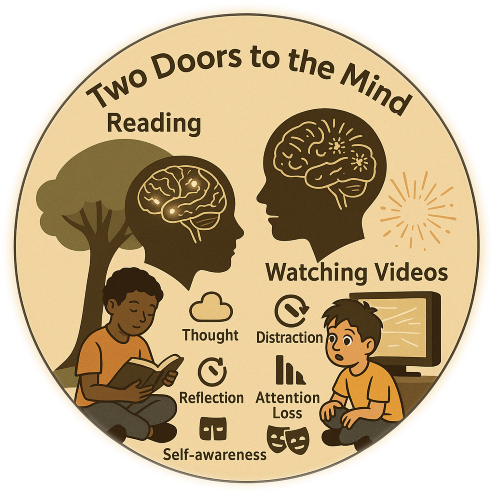
    Let’s begin with the brain. Reading is not a passive activity — it’s an active, energy-consuming process involving multiple complex regions of the brain. Reading engages several parts of the brain that facilitate critical thinking while watching of videos adulterates the learning process by subtly  stimulating the emotional region of the brain – the amygdala. Studies using fMRI confirm that reading — especially deep reading — is mentally taxing and builds cognitive stamina, focus, and abstract reasoning. On the contrary, the sights and sounds built into videos facilitate quicker absorption of information by the brain with minimal efforts. They engage more of the limbic areas (emotion) but less of the frontal lobes (reasoning) thus lowering internal visualization, analysis and synthesis of information.

    ActivityKey Brain Regions ActivatedCognitive Outcome
    ReadingVisual Word Form Area (VWFA), Broca’s area, Wernicke’s area, Prefrontal Cortex, Angular GyrusDeep comprehension, memory integration, critical reasoning
    Watching VideoOccipital Cortex, Auditory Cortex, Amygdala, Default Mode NetworkPassive absorption, emotion-based reaction, reduced analytical effort
    Parts of the brain activated during reading or watching videos
    Reading facilitates overall personal development

    Research using fMRI scans shows that children who read more have stronger connectivity between the VWFA and the brain’s language and executive function areas. In contrast, excessive screen time is correlated with weakened white matter in those same regions — especially those tied to language and self-regulation. The motive here is not to totally write off watching of movies for entertainment or educational purposes. I believe that videos are a powerful learning aid when used to augment but not substitute reading. The catch however, is that inordinate use of visual media cultivates mental passivity. It short-circuits the brain’s deep-learning circuits, weakens cognitive stamina, and replaces reflection with reflex. Visual aids essentially mimic a feeding bottle or spoon-feeding syndrome where partly digested food is feed directly into the intestine of an infant without engaging the tongue and teeth. Videos and visual aids impair deep and long-term learning by reducing cognitive ability, decreasing attention span, weakening of imagination and internal visualization in addition to reducing shallow processing. What we gain in speed, we often lose in substance.

    Reading builds the mental scaffolding for structured thought. Watching lets that scaffolding sit unused.

    2. The Passivity of Watching: Recline and Decline

    Have you noticed that people often watch videos lying down? Reclining on a couch or bed, mentally drifting, barely blinking? That’s not a coincidence. When the body reclines, the brain receives a clear signal: ‘It’s time to rest.’ The posture we choose becomes the posture of our mind. Sit up, and we signal readiness. Recline, and we invite passivity. That’s why real learning rarely happens when we’re lying down. But unfortunately, entertainment and educational visual media naturally invite us to “relax and enjoy” or “learn with fun”. Both messages send signals to the brain to slow down mental activity.

    Watching encourages passivity. Videos present pre-processed imagery, tone, pace, and even emotion. There is little left for the viewer to construct or wrestle with. Studies have shown that students who frequently consume visual media score low on reading comprehension and delayed recall. It has also been reported that heavy screen viewers manifest reduced working memory activation.

    Reading is the opposite. You sit up. You process. You imagine. You ask questions. It challenges your imagination and you challenge the validity of the information. Your intellect wrestles to construct a full picture of the message in the text. A man watching a video has little control over the rate at which information is being transmitted. He may hit the pause or replay button but we all know how inconveniencing that can be. On the other hand, a book is under the full control of the reader, thus giving them the leverage to pause, think deeply and reflect before continuing. What does the book do? It simply sits on the table waiting for the reader to continue or turn the next page. This is the level of engagement that makes knowledge to permeate and consolidate in the mind. It is usually in the pauses that inspiration is birthed. Ever heard of the saying “reading maketh a full man?” This concept in rooted in Indian tradition which believes that reading builds character and intellect. The same cannot be said of overindulgence in watching videos. If anything, it can be said that watching videos reduces men to babies.

    TraitReadingVideo Watching
    Mental EffortHighLow to moderate
    Depth of ProcessingDeepOften shallow
    RetentionLong-termShorter-term
    Emotional InfluenceControlled by readerOften manipulated by pacing & music
    Builds Discipline?YesRarely
    Quality of learning obtained by reading and watching videos

    The more we replace reading with watching, the more we risk training a generation of minds that can consume but not construct; react but not reflect; receive but not realize; absorb but not assimilate.

    3. Moral and Social Dimensions

    The repercussion of over-dependence on visual media and its gradual displacement of reading culture also extends to the social and moral domains. Reading cultivates a climate of inner stillness. It invites quiet, contemplation and judgment. Even in a room full of readers, you find a sacred hush — the outward sign of inward thought. In contrast, video-watching thrives amid chaos. A room of a hundred people watching separate screens feels louder, more fragmented, mentally unsettling and more emotionally volatile. A generation raised on reading tends to be reflective. A generation raised on flashing videos risks becoming restless, impulsive, and shaped more by image than by insight. Readers pause. They weigh. They apply reason and moral reflection to what they receive. Even when they are persuaded, the process is deliberate and often transformative.

    Video, however, often bypasses that mental discipline. Its pace, music, and visuals stir emotion before reason has had its say. Even when you don’t agree with the narrative being pushed in a video, it still leaves its footprints on your subconscious mind, thus subtly influencing or weakening your convictions and slowly softening convictions or reshaping them in ways we don’t detect or would have consciously permitted. For example, most African traditional values have been eroded as a result of uncensored exposure to decadent western lifestyle propagated through movies.

    A sharp contrast between how reading and watching videos affect morals and behaviours can be drawn using crime novels and crime movies. There is some evidence that violent visual media (like crime movies or TV) may increase aggressive behaviour or desensitization to violence, especially in vulnerable individuals. However, reading crime novels does not show the same effect — in fact, it often engages empathy, moral reasoning, and reflection. While both video and written content can influence thought, overwhelmingly visual media (films, games, and online videos) have been directly linked to violent criminal behaviour. The emotional immediacy and immersive nature of videos make them more likely to incite impulsive action, especially in unstable individuals. Reading, by contrast, tends to encourage reflection, delay, and distance — even when the material is dark or violent.

    Video scenes tend to partially hijack the viewer’s mind to the extent that they sometimes begin to mentally participate in the acts being relayed. This is because the brain mirrors the action being watched especially in highly emotional or immersive situations. For instance, watching a football match involving your favourite club and reading a novel about the same game do not produce the same effect. The video version will engage your emotions more and can even induce a fever in you if your club loses. This exactly why some football fans do weird things while watching a game they are vested in. Common reactions include:

    • Flinching when their team almost concedes
    • Shouting “Shooooot!” and thrusting their legs forward
    • Jerking their heads as if dodging a ball
    • Even falling off chairs during penalty shootouts!

    I am not a football fan, but I once watched a football match involving my country. My body temperature rose by several degrees during that episode, yet I could not stop watching. A book wouldn’t have caused me such trauma.

    BehaviorCrime MoviesCrime Novels
    📈 Increased aggressionLinked in multiple studies, especially in youths, impulsive individuals, or frequent viewersNo strong evidence of aggression increase
    📉 Empathy erosionPossible with repeated exposure to violent visualsRare; often enhances moral sensitivity
    🔄 Mimicry of crimeDocumented cases exist (e.g., “copycat crimes” tied to films or series)Extremely rare from reading novels
    📚 Cognitive stimulationLow-moderate, mostly sensoryHigh: visualization, inference, judgment
    Contrast between crime novels and crime movies

    What enters the soul unfiltered eventually becomes part of the soul. And the unfiltered flood of images that defines our era may be forming not just our thoughts — but our character

    4. Neuroscience of Atrophy: Empirical Evidence

    Only very few people understand the long-term damage inordinate watching of videos inflicts on people. On the other hand, almost everyone agrees, even without knowing why, that reading builds intellectual stamina, stimulates critical thinking and generates inspiration. Early exposure to books has been found to correlate with stronger brain connectivity, better school readiness, and higher long-term cognitive scores. There are parents who sedate their children with a high dose of videos until they become addicted to virtual alternatives. A good reading habit is an art of discipline that is gradually fading away, thus producing a generation that can hardly grasp complex issues let alone resolve them. Reading requires patience, persistence and focus. A book might take weeks to read, but it can be watched in two hours when condensed into a movie. One is like planting a tree which takes years to mature. But when it does, it is entrenched in the ground like a colossus. The other is like the emergence of the butterfly from the chrysalis – dazzling for a moment and then fading into oblivion. You may think of watching videos as sustaining a person on semi-digested liquid food and reading as serving someone a solid balanced diet.

    Effect of reading and video watching on the mind

    So how exactly does watching videos affect the brain? The following scientific evidence should immediately convince any doubting Thomas of the superiority of reading to watching videos.

    • A study published in JAMA Pediatrics showed that children exposed to more screen time had thinner cortexes in areas responsible for language and executive function.
    • Another found that screen-heavy children had reduced white matter integrity in regions tied to reading and self-regulation.
    • A 2020 study reported in Health.com found that adults who read regularly had better memory, cognitive flexibility, and even lived longer.
    • EEG studies (electroencephalograms) show that during passive video watching, especially television, the brain produces more alpha waves — the same waves associated with relaxed, unfocused, or even drowsy states.
    • Watching videos (especially YouTube, TikTok, or autoplay series) causes frequent dopamine surges. Over time, this leads to diminished reward sensitivity, less motivation for tasks that require effort (like reading or deep work) and a “lazy” cognitive state, even while the viewer feels entertained.

    These aren’t minor differences. They’re structural. They literally reshape the brain.

    FunctionEnhanced by ReadingImpaired by Excessive Watching
    Verbal Reasoning✅ Yes❌ Weakened
    Abstract Thinking✅ Yes❌ Blunted
    Focus and Attention Span✅ Improved❌ Reduced
    Imagination and Simulation✅ Engaged❌ Outsourced to visuals
    Emotional Regulation✅ Strengthened❌ Dysregulated by hyperstimulation
    mapping of mental capacity development to reading versus watching videos

    Watching may inform. But reading transforms.

    5. Final Reflection: Why This Matters

    There is no doubt that videos can support learning, especially when well-designed, but they do not replace the deep neural engagement required for mastery, critical reasoning, or long-term transformation. A society becomes shallow, reactionary, emotionally volatile, and less equipped to handle ambiguity. Reading is not just another format. It’s a workout for the mind. It’s a test of character. That’s why books still form the backbone of education, research, and even spiritual development. Should video triumph over reading, we risk raising generations of screen-fed zombies — hollowed minds, dulled hearts


    Reading is not just a habit; it is a virtue! It is not just a culture; it is curative! If we lose it, we don’t just become passive consumers. We become intellectually disarmed citizens of the Animal Farm!

    Start reading again from today, and you will start living fully again!

    Bibliography

    1. Bavishi, A., Slade, M. D., & Levy, B. R. (2016).
    A chapter a day: Association of book reading with longevity. Social Science & Medicine, 164, 44–48. https://doi.org/10.1016/j.socscimed.2016.07.014

    2. Cao, Z., Wang, Y., Liu, X., & Zhang, Q. (2024).
    People with short-video addiction show altered brain responses during decision-making: An fMRI study. NeuroImage: Clinical, 41, 103312. https://doi.org/10.1016/j.nicl.2024.103312

    3. Cheng, T. L., et al. (2019).
    Association between screen media use and brain structure in children. JAMA Pediatrics, 173(9), 852–859. https://doi.org/10.1001/jamapediatrics.2019.1759

    4. Hutton, J. S., et al. (2015).
    Home reading environment and brain activation in preschool children listening to stories. Pediatrics, 136(3), 466–478. https://doi.org/10.1542/peds.2015-0359

    5. Hutton, J. S., et al. (2019).
    Associations between screen-based media use and brain white matter integrity in preschool-aged children. JAMA Pediatrics, 174(1), e193869. https://doi.org/10.1001/jamapediatrics.2019.3869

    6. Krugman, H. (1971).
    Brain wave measures of media involvement. Journal of Advertising Research, 11(1), 3–9.

    7. Lillard, A. S., & Peterson, J. (2011).
    The immediate impact of different types of television on young children’s executive function. Pediatrics, 128(4), 644–649. https://doi.org/10.1542/peds.2010-1919

    8. Lin, M., Jiang, W., Xie, X., & Luo, Y. (2023).
    Short-video addiction is associated with impaired executive function: Evidence from EEG and behavioral tasks. Frontiers in Human Neuroscience, 17, 1139400. https://doi.org/10.3389/fnhum.2023.1139400


    Feel free to drop your comments or share your personal experience in the comment section for further engagementsIf reading this post was helpful, share it with others who might need it. Subscribe to get new posts directly in your inbox and watch out for more.